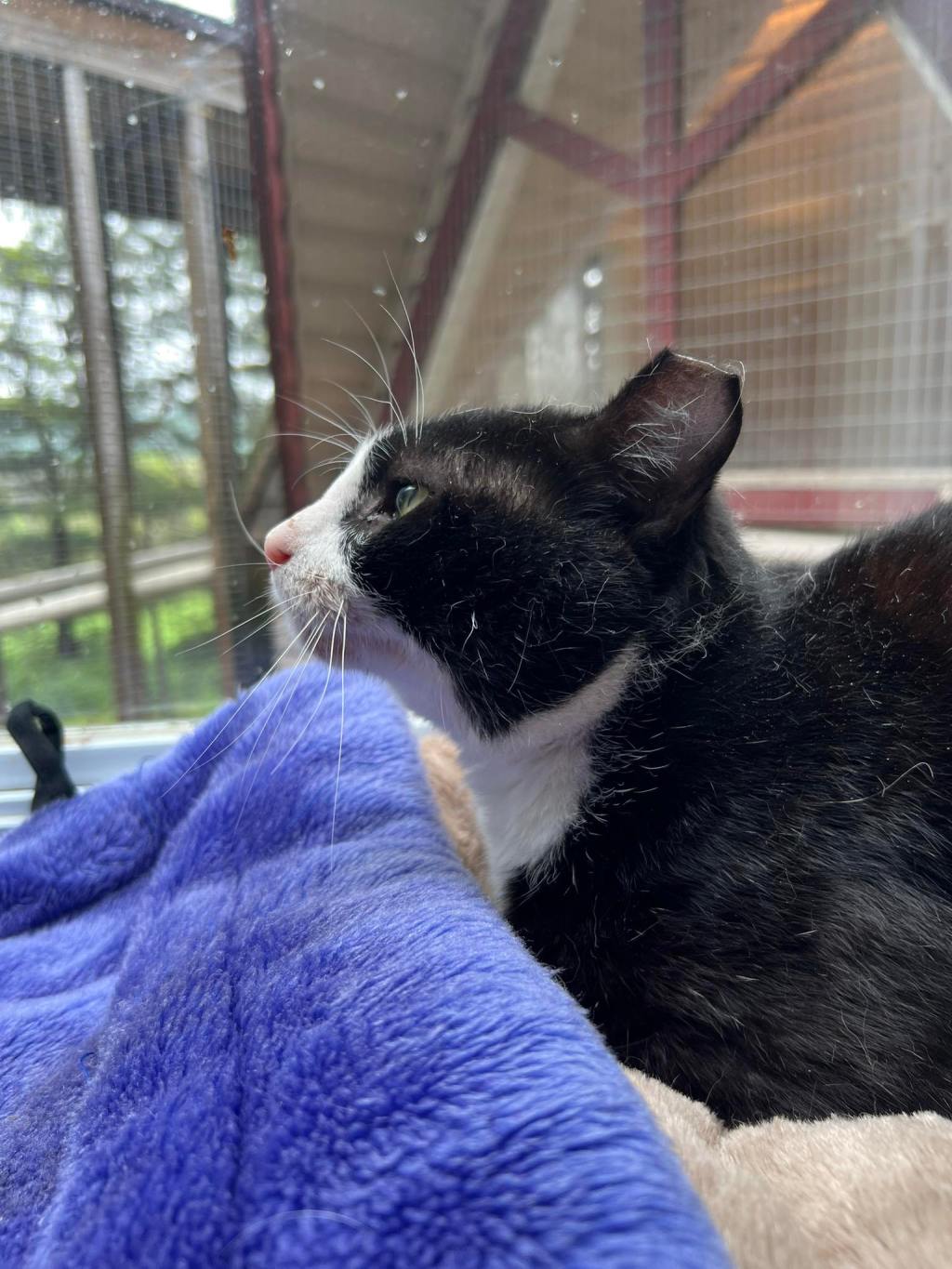
Feral FeLV+ cats like Penguin don’t often get a second chance — too many are euthanized simply because they carry the virus. It’s a hard life for them on the streets. But Penguin got lucky. He found a safe, loving home at The Best Little Cathouse in PA, where FeLV+ cats are given the chance to enjoy every day they have. Now he’ll spend his time soaking up sunshine, curling up in cozy beds, sharing meals, and best of all, making friends with other kitties. I’m so grateful places like this exist to give cats like Penguin the happiness and care they deserve, for the rest of their lives. – Nicole, Animal Rescuer and Guardian
FIV & FeLV: What Every Pet Lover Should Know About These Feline Viruses
When it comes to feline health, two of the most commonly misunderstood diagnoses are FIV (Feline Immunodeficiency Virus) and FeLV (Feline Leukemia Virus). These three-letter abbreviations can spark fear in the hearts of cat lovers, but understanding them is key to helping these kitties live healthy, happy lives—and reducing the stigma that surrounds them.
What Are FIV and FeLV?
FIV is often referred to as the “feline version of HIV.” It weakens a cat’s immune system, making it harder for them to fight off infections. FeLV, on the other hand, is a virus that affects the immune system and can lead to anemia or lymphoma. Both are contagious among cats, but they cannot be transmitted to humans or dogs.
How Are They Spread?
- FIV is mainly spread through deep bite wounds, which is why it’s more common in unneutered male outdoor cats who are prone to fighting. Casual contact—like grooming, sharing food bowls, or sleeping together—rarely spreads FIV.
- FeLV is more easily transmitted through saliva, nasal secretions, urine, feces, and even from mother to kitten. Cats can get it through grooming or sharing litter boxes, food, and water.
What Are the Symptoms?
These viruses often don’t show immediate symptoms. Some cats live for years without any signs, while others may develop:
- Weight loss
- Fever
- Loss of appetite
- Dental issues (especially with FIV)
- Recurring infections
- Lethargy
- Pale gums (FeLV)
Diagnosis & Testing
The best way to detect these viruses is through a blood test at your vet. Many shelters test cats before adoption to ensure transparency and help match them with the right homes.
Can FIV or FeLV-Positive Cats Live Normal Lives?
Absolutely. With regular vet care, a healthy diet, and a safe indoor environment, many FIV+ and FeLV+ cats live long, happy lives. Some never develop serious health issues at all.
Adopting a FIV or FeLV Cat
These cats are often overlooked in shelters because of misconceptions. But they are just as loving, playful, and deserving of a forever home. In fact, many adopters say their FIV+ or FeLV+ cat has been the sweetest companion they’ve ever had.
If you have other cats, talk to your vet about the risks and whether it’s possible to safely integrate a positive cat into your home. In many cases—especially with FIV—peaceful cohabitation is totally doable.
Final Thoughts
FIV and FeLV are not death sentences. They are simply health conditions that require a little extra love, attention, and understanding. If you’ve ever considered opening your heart to one of these special kitties, you won’t regret it. They have so much love to give—and they need champions like you to help tell their stories.
Would you like this formatted for Instagram or need a graphic or infographic to go with it?
 Helping Outside Animals